Episode
The WWE and ESPN drama explained
This is a free preview of a paid episode. To hear more, visit brassringmedia.substack.com The Brass Ring Media Pro Wrestling Podcast is here to explain the…
Podcast
Brass Ring Media · May 11, 2026 · 33:49
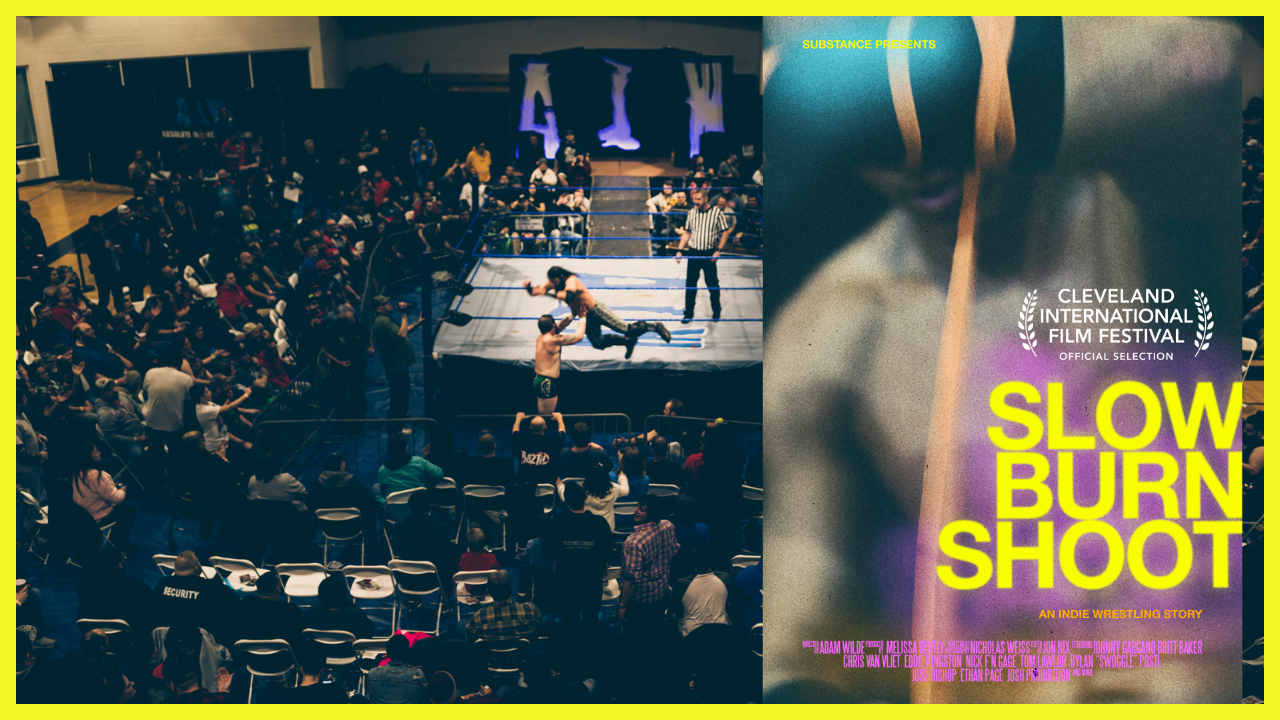
The Brass Ring Media Pro Wrestling podcast is back with a brand new interview from the creators of Slowburn Shoot — An indie wrestling story. It’s a film about AIW and independent professional wrestling. Zack Heydorn chats with director, Adam Wilde, and AIW owner, John Thorne.
Topics discussed include details on making the film, the history of AIW, seeing the prominent pro wrestling stars of today like Johnny Gargano, Ethan Page, Eddie Kingston, and others making waves in the industry after having worked for AIW, the culture of indie wrestling, and much more.
Subscribe to the Brass Ring Media Newsletter HERE.
Follow Zack Heydorn on Bluesky @zackheydorn.bsky.social.
Zack HeydornWhat's going on everybody? Zack Heydorn here with two very, very special guests today. The director and subject of the brand new film Slow Burn Shoot, an indie wrestling story. Today with me I've got Adam Wilde and I've got Jon Thorne. Guys, what is going on?
GuestAdam, how are you? I am doing great. I'm excited to be here and I'm excited to get this story out to the world. I think it's a fun story and it's an important story for people to see.
Zack HeydornWell it's a heck of a it's a heck of film and I encourage everybody to to check it out when you get a chance to I'll talk about how you can do that here in a second but john how are you your your your story is now out there how does that feel man.
GuestIt's a strange feeling, I'm not going to lie. It's a very odd thing to enter a movie theater and watch this kind of personal story play out. It's been a very unique experience to say the least, but Adam could tell you I was probably going in maybe the harshest critic ready to hate the thing because it's so uncomfortable when you're the subject of something like this. I don't want to give away too much of it but it does get rather personal and it tells a very personal story of things that have happened in our small little wrestling community so to say the least it was very uncomfortable but after seeing the finished product it has me very excited for the potential of this film and just getting this thing out to more people to see because it really did turn out beyond any expectations I could have ever had for it. It really is. It's not just a documentary about wrestling or a wrestling story. It turned out to be a very great film.
Zack HeydornSo John, you are the founder of AIW in Cleveland, which is kind of the central part of the film where everything revolves around that and examining that. Adam, obviously you're the director of the project. How did you guys hook up on this? Because honestly, there are as you know guys both there's tons of different independent wrestling promotions out there they all are a lot of them have interesting stories Adam how did you pick this one and John you know why why was this something that appealed to you we'll
Gueststart with with Adam yeah so I um after my son was born um kids baby sleep a lot right so I had some time on my head my buddy got me out of the house and I'm I live in Cleveland Ohio I run a studio here so um I'm familiar with the filmmaking world and all that so he took me to an AIW event and it happened to be and it was like just about 10 years ago it happened to be Johnny Gargano's last night in town so I'm walking into this and like I actually didn't I have heard heard of Johnny Gargano but I didn't know his impact on not only Cleveland wrestling but of course where he was going so It was his last night. He had just signed his NXT contract. It was this church gymnasium on the west side of Cleveland. It was an oversold, overpacked, raucous crowd. He gave the performance of a lifetime. The crowd was going crazy. Afterwards, he gave this hour-long speech. He was crying. The crowd was crying. I'm just sitting there going, what is this subculture that exists 10 minutes from my house that I had no idea even existed? I kind of backchanneled and I was able to talk to John and I came up in the world as a photographer so I was like hey John nice to meet you I'd like to do a photo project he's like oh yeah we got kids who are and people who shoot ringside all the time and I was like actually I don't care about the wrestling I want to go back behind the scenes and I want to shoot character portraits of these guys and just like start learning these stories. So I followed them every show, which was like a show every three weeks or so for about a year. And I was backstage and I was learning the characters and I was shooting these character portraits and I was earning the trust. And that's when I said, after about a year, I said, hey, I think I want to tell some bigger stories. Can I bring a film crew in?
Zack HeydornWow. And John, when you heard that, What's your initial reaction?
GuestMy initial reaction wasn't much, to be perfectly honest with you, because we have all kinds of people that approach us and say, hey, you know kind of similar to the photography thing like hey I'm a photographer hey I want to make this documentary and it's usually you know some kid that is trying to get a you know intern credits or something for a college program and they want to put together like a little 30 minute piece for YouTube which has happened to us you know sporadically over the years so I just said yeah okay you know whatever that sounds cool any you know any kind of you know good you know piece of media out there is you know it can't hurt and so you know I tell him it's good to go all that stuff and I'll never forget this and I you know I told Adam this recently you know I'm going and I'm thinking it's going to be him and a camera he's going to get a couple sit down interviews and be done and I arrived at the venue and they were already at the venue the day of an AIW show which is you know at this time downtown Cleveland very very populated area in downtown Cleveland in the flats and there was like you know I'm sure it wasn't but in my memory it was like a semi truck and it's all these cameras and different things coming off and I'm thinking like I haven't seen cameras like this other than outside of like watching the show Entourage or something you know like this is like this is like a real deal like Hollywood sort of production I mean gigantic cameras and rigs and you know crew everywhere and there was craft services people and all this other stuff going on and I said well I don't know what I just agreed to or signed up for but this this is appears to be way bigger than than I envisioned in my mind. And, you know, from then on, they sporadically came back over the course of seven or eight years, you know, capturing footage. And every time Adam thought that maybe he had the story that he wanted to tell, something else would happen. And he would start covering that and You know, I'm sure Adam can get into this a little more, but, you know, I think he shot something over like 100 hours of footage, you know, and then through that was able to kind of whittle it down and find the film that, you know, exists today, but it was a long, long, long process.
Zack HeydornIncredible, incredible. Yes, and Adam, we definitely will get into that. But John, you know, AIW is your baby. It's your thing. How did, like, just give our audience a sense of, like, how the heck did you start something like that? Like, how did you start something like that? Why did you start something like that? What, you know, just give everybody kind of like a good baseline of what AIW is.
GuestSo I got involved in the world of wrestling in a very unconventional way, a way that I don't think is even possible in the years, you know, 2026. But in 1999, when I was 15 years old, I, you know, decided I wanted to do wrestling in a ring because wrestling is very popular. We're at the height of the Attitude Era, the late 90s, all of that. Backyard wrestling is kind of a thing and all this stuff is kind of starting to pop up in these subcultures and I get a local promoter's phone number named JT Lightning who ran Cleveland All Pro Wrestling which was the Cleveland Independent Wrestling throughout the 90s and the early 2000s and I call him up and I say hey I want to rent your ring he says 300 bucks you got to give me a match on the show too and we said he has no idea he's talking to a 15 year old kid at all on the phone. He just wants his 300 bucks. And from there, I kind of gather, you know, different people throughout, you know, that I'm going to high school with and things like that. And we decide that we're going to do a show. I get my one buddy who I'm 15. He was 18 at the time. He was able to sign for a hall to rent. And, you know, because I couldn't sign for it because I was only 15. And, you know, JT Lightning shows up sees it's a bunch of teenage kids that aren't trained or anything like that and he could have walked away you know and said give me the money you know you kids are crazy but instead he like he decided he was going to help us and he let us do the show and you know all this other stuff and from that point on I was involved in the local wrestling scene from that day on you know through you know JT and different things also on that show who are also subjects of this film were some guys that were from the same town as me, Josh Prohibition and M-Dog 20, Matt Cross. They were doing backyard wrestling at the time. And this day in 1999, April 24th, 1999, is the first time that they are involved in, they enter a real professional wrestling ring. Now, fast forward, you know, all these years later, one of the subjects of this film is, is Josh Prohibition and he's now having his final match. They don't really get into this in the film, but just to kind of give some context of the history that we all have together throughout this journey, some of us nearly 30 years have been along the way. But fast forward from 1999, 2005, I'm 21 years old. I see kind of an opportunity to do this again and I start AIW which is you know at that point we wanted to do it in concert clubs and you know kind of cater to more you know you know 18 you know to 30 types of people that want to go out have fun and experience a different type of wrestling because JT Lightning in Cleveland the Cleveland wrestling scene was very very kind of traditional very you know just you're showing up you're getting a wrestling show you're not getting an atmosphere you're not getting anything like that we wanted to kind of change that and provide something different. So kind of a long way to get to in 2005 when I was 21 years old, I decided to start AIW.
Zack HeydornWhat a story. Adam, was it important for you to kind of capture that history or how did you capture that history within the talking to talents, you know, big and small now that may have not been there from the very beginning?
GuestYeah. So luckily, like, AIW holds a lot of respect for the legacy of those that came before it and as far as who built the promotion, right? So clearly John was a large part of that. There was another promoter. His name is Chandler Biggins. He was a large part of that. And John and Chandler have a podcast called The Carter's Going to Change where dating back 10, 15 years, it feels like they have hundreds and hundreds of episodes that kind of go into you know how they make the sausage with running an independent promotion, which is really, really fascinating. But I had I mean, I listened to literally every single one of those podcasts to try to understand the details of it and then to get opportunities to eat to interview like a Johnny Gargano, who was there from the very beginning and Ethan Page, who is one of the guys who John was bringing in. for years and years and years before he made it up to the big league, so to speak. So there's just so much culture and legacy with these guys. And I think Ethan Page, I don't even know if we used it in a film, but at one point he's like, how can you not respect this promotion when you've got guys like Josh Prohibition, Johnny Gargano, and he just lists off, without even knowing it, all the people that are in the film about just the legacy and the respect that has been built there. So it was really kind of interesting.
Zack HeydornSo, all right, so you, I just, I got to ask now, 100 hours of footage. Man, like, take me through just, just like, I don't know, talk about, you know, creating the sausage. Like, how do you figure out what you want to shoot and how do you weed through all that footage and years and years of, of, of material? Like, what, what came first? Like, we're going to get this and then we're going to look at it or Here's the story I want to chase. That's what we're going to look for.
GuestYeah. So Chandler was always going to be a big part of this story. And I don't know how deep we go into this because there are some surprises in the film. But certainly his story was one that I wanted to anchor the film around. So from there, I was like, is this an exploration of like, Why do these guys get into the profession where they just beat the hell out of each other? Like there has to be something a little bit off with them. And the more I explored that, the more they're like, I just loved wrestling when I was a kid. So I wanted to do it. And then the first time I got the chance to do it, people clapped and I felt great about doing it, you know? So it came down to that. Like it was so basic that I was like, all right, I don't know if that's a story. So so then we just kind of kept exploring a little bit more and we found these different things so I knew that I wanted to kind of I wanted to do something that was about indie wrestling as a whole but it was just kind of told through the lens of AIW so certainly there's some very personal specific stories that happen in this film but I think we're trying to focus on a student who's trying to break in we're focusing on a WWE guy who got let go and is trying to rediscover his his career on the indies. We're talking to guys who have been on the indies for 20 plus years and finally make it and then guys who have been on the indies for 20 plus years and saw all of their friends make it and never made it. So like I do think this is a story that can you can just plop it into any indie promotion and any city around the country and and it can relate to everyone. So that's why I thought it was really really special.
Zack HeydornInteresting. John, so the feature appearances in this show, I mean, it's a bit of a who's who of folks that are in, you know, top positions or top-ish positions at some of the biggest wrestling companies in the world right now. Johnny Gargano, Rick Baker, Eddie Kingston, Nick Gage, Ethan Page, and others. What's it like seeing those guys who kind of came through your promotion now on a bigger stage making waves.
GuestI mean, it's a very strange feeling to be honest with you because they are just people that at one point are looking at me for an opportunity, looking at me for a platform. And now to see them on the biggest platforms in the world, it's just like, it's crazy. And AIW, like Adam said, There's an AIW in every city, USA, pretty much, you know what I mean? And we're just kind of, I look at it as we're just a small part of everybody's story along the way to get to where they're going. Like, I would, you know, I don't take any sort of credit or anything like that that, you know, Wrestler X, you know, made it because they came through AIW. What this film kind of shows is just really the perseverance and just determination that kind of makes people in the wrestling business a little different, just the grind of it all. And just like Adam said, some people in this film, they go into great detail that they've been wrestling at this level for 20 plus years. and everybody else makes it except for them. And then there's people that are brand new entering the business that are featured in this film. These stories kind of apply, like Adam said, to every independent wrestling organization throughout the world. But for me, to see the people that I've developed these friendships with and these working relationships with over the years, it's amazing. It truly is amazing because you know it kind of shows in a small way like I saw something in them at a very very very most of the time early point of their journey and now it kind of you know It endorses my bet, so to speak. I bet on these people and now the major companies are betting on them and they're becoming major contributors to the industry. It's great. There's so many different people that have come through AIW along the way. Seth Rollins used to drive eight hours from Iowa, do AIW, and then drive eight hours back. He did that well over a dozen times, even before Ring of Honor. He was doing AIW shows. Kevin Owens slept on my couch in my old apartment. There's just so many... So many people that have come through that have gone on to be major, major stars in this industry that have come through AEW. And it's great. It's great, you know, historical content and things like that. And I think what this film shows is it's constant, no matter what, forward motion for AEW or AEW. just the independent wrestling organization in general you constantly have to be moving forward you know one way or the other because people are going to come and go and you're you have to kind of you know you got to restock the pond so to speak and you know that's that that's what we've been trying to do and I think that's what's kept us in business for over 20 years which is you know kind of rare for an independent wrestling organization these days
GuestOne thing that John is not going to give himself credit for is that as I was learning and talking through all these characters over the years, like these indie guys look at AIW as like one of the last check marks on their resume before they really try to go up. So they're coming from all over the country to try to get their foot in the door at AIW specifically. and it's just like it was so surreal for me as a Cleveland filmmaker to just recognize that like this is in my backyard and it's like this launch pad promotion that all these guys around the country respect so highly and I didn't even know it existed so that was one of the the other things that I thought was really special
Zack Heydornabout it uh John or excuse me Adam did you learn anything knew about pro wrestling like how how how much of like were you a fan of pro wrestling are you are you were you knowledgeable about the industry or was it completely eye opening in terms of what it is and what the business is and what you know independent wrestling.
GuestHonestly, I'll say I had a very similar journey to probably most people in the world. I was huge into wrestling as a kid. And then at a certain adult level, you kind of like fade out of it. And then if you get turned back into it, something is there to grasp you and grab your attention. And that Johnny Gargano match at the AIW show was that thing for me. And that's really what kind of like really pulled me back in. and then as I was doing that photo documentary series behind the scenes, I really started learning the ins and outs of the business and how it was running and just having talks with Thorne about you know just the complexity of his job I was just texting him the other day and I was like dude every time I learn more about what you're doing I just think it sucks and not that what you're doing sucks I'm the thing like the job that you have sucks because all these guys are just they're like getting promoted and then he loses access to him in the middle of giant storylines or they get bounced from these bigger ones and they come back but they're way too expensive for him to afford so like and it's just like this constant like trying to make a show for the for the audience and it was just like that complexity of it just how much goes into just trying to make an entertaining show for the audience is just so special so It was eye-opening. As much as I thought I knew, I did learn a lot more. And particularly, it's that community that I didn't expect to see. You see these guys beating the hell out of each other in the ring. And you imagine that there's friendships in the back, but it's more than that. It is like a true community where, and I think Thorne, again, he said it best, but I'm going to steal the words out of his mouth. you have every race, every political belief, every socioeconomic class all in the same cramped backstage locker room and they all get along. They all support each other. They all want to see each other successful. And it is just like real true community that is like this microcosm of how the world can exist. So it's a special thing.
Zack HeydornI think that's a cool part about the film is that in watching it, I think I think you were able to capture that you know I mean if you're out there wondering like how can that be you got people that are trying to get here and as everyone says right it's a shark business you did a nice job of capturing that kind of communal thing that independent wrestling has and I think that's one of the For me, anyway, it was one of the most interesting parts of the film. Adam, what was it like talking to those talents that all had different but positive things to say about AIW? You mentioned how it's kind of like the final stop on their journey upward. But you talked to all these folks who are now looking back. I mean, were you surprised to see just what kind of a, not so much like that they were using it as a launching pad, but that AEW was a place where they honed their art, honed their craft, found their voices. What was it like hearing those stories from these folks who have made it?
GuestYeah. So a lot of them, when I was talking to them, I thought they were, I was going to get some context, but like I come from a commercial world where I'm making brand videos. I'm making commercials for, for huge national brands on a large national scale. So As I was making this, I have to tell myself, don't make it a brand video. Don't make it a brand. It's not about AIW. It's about indie wrestling. But when I was talking to these legacy wrestlers who are now in these huge spots, I was trying to get some contacts. They certainly had interactions with Chandler, who again said was like that center point that we were kind of building the story around. But their respect and their love for AIW pushed it so it was like It was very unexpected how much they all love this promotion, even if they're not from here, how impactful this particular promotion was to their career and to who they feel like they are as people. So it was profound talking to all of them in that regard. And they were all just like, they were so willing to help and so into the story that we were trying to tell that they made it really easy for me.
Zack HeydornJohn, you've been doing this for so long. Give me a state of the state on the independence right now across pro wrestling. To me, it's changed a lot because everything is so much more accessible than it used to be. I live in Chicago and I had my independent promotion here and to see it, you just had to pretty much You had to go to the show here. You know, and now here we are 20 odd years later from that. And like, if you want good wrestling on a Friday night, you can fire up a multitude of different apps and platforms or whatnot to find it. So what's the state of the state of indie wrestling and how has it changed in the last 20 years?
Guestwell it's changed I mean it's changed quite a bit you know like like you said you know you used to kind of have to seek it out sort of thing now now it's everywhere and while there are benefits to that I also see a lot of negatives coming from that because you know just like anything I'm sure you know writing articles you know it's just you're pushing things out into this content abyss that is social media and it's very easy to get lost in the shuffle and I mean we've you know we've gone through every era from like DVD era to the online pay-per-view era to the online VOD download era to the streaming era. And it's changed so much because there's so much more accessible, right? Like 20 years ago, if you were in that top echelon of independent wrestling, like it was hard for the other groups throughout the country to get any sort of any sort of exposure. Now, it's made it a little bit easier for good groups bad groups and everything in between to get exposure so now the good so now the good places are kind of you know you're all kind of fighting for this for this space but you know the world moves so quick now with social media and everything there's not much there's not much growth even though there's so much more opportunity there if that makes sense so you know I made the decision a few like two two-ish years ago We left Triller, we left the big streaming independent wrestling apps and we went to YouTube, but we went to a subscription model on YouTube as opposed to where everyone's putting everything out for free on YouTube. And I've noticed, at least from what we've been experimenting with, that there is growth through going smaller and kind of honing in on, okay, we're just... For 18 plus years, we were chasing the world, right? Like through dream matches or, you know, how can we sell a DVD or how can we sell this video? Now we're really focusing in on Northeast Ohio, right? Like how can we get people through the doors? How can we sell tickets? How do we not having to rely on that video revenue anymore because video has gone It's become almost so valueless because there's just so much. Look at all the free wrestling on television now. WWE is putting out 10 plus hours a week. Then you have TNA on TV. You have AEW with two shows. It's become so much of a full-time job for a wrestling fan to just enjoy wrestling now because we've entered the the rights era and the content era so you know for us we've decided that we are going to focus more on you know bringing people cultivating fans cultivating talent through our wrestling school trying to bring new people through the doors get that live experience as opposed to let's book this great talent versus this great talent and hope that back in the day, you would hope that would sell a DVD where you're getting $10 a DVD sold or whatever like that. Then the money just kept getting less and less and less as you entered into the streaming. So now it's like, how can we sell tickets? How do you sell tickets? You focus more on the performers that are locally based. It helps with the self-promotion. Our crowds have not gotten any smaller over the last 20 years. We're trending up again. We're averaging right around four to five hundred people a show. And, you know, at the independent level, that is, you know, that's a tremendous number. So I think the state of the indies, so to speak, in the industry is, I think you're seeing it get more regionalized, almost territorial, like, you know, way back in the day to where You know, you're going to have, you're in Chicago, you're going to have, you know, your two major Chicago promotions, AAW Freelance, right? Like, they're going to kind of control the market share. And both of them are really focusing on, you know, kind of the same thing. Freelance especially is, you know, doing a lot of just like locally based wrestlers, you know, bringing a couple of these stars or more well known people. you know what I mean but have that local core and I think you're going to see more of that throughout independent wrestling is independent companies are going to develop their develop their talent develop their local core you're going to bring in you know a legend or a star or you know there's so very few top tier independent wrestlers available right now because like I said we're in this content rights era right AEW WWE TNA they all need talent people are getting signed up at such a rapid rate so you can't really rely on those types of talents anymore either right because you don't know when somebody's going to be gone right like right now the AIW champion Sam Hardaway Holloway he signed a WWE ID contract right so he could be taken off our board at any time so you know Again, he's somebody that's just developed right out of our wrestling schools. He's 23 years old. You don't expect people to come off the board that quick, but he can come off the board at any time now because talent's getting signed up. Because right now, all these companies, they're betting on people, right? They want to buy low and sell high. It's just like stocks or anything else. They're buying up talent and they're hoping that you can cash in on it. I personally think you know there's there are companies that are doing it like GCW touring and things like that but but I think you're going to see less and less companies able to do that because the talent pool is is is getting smaller and you're going to see more independent companies focus on a regional kind of locally based talent pool and you mix in some of the legends and some of the the names and the the upper tier talents that are available to kind of you know keep the quality and spice it up a little bit but
Zack HeydornI mean, I don't know. I think about this stuff nonstop.
GuestIt just runs through my brain.
Zack HeydornAdam, you're not kidding. That's complicated.
GuestI mean, I saw a change like in the seven years that I was doing this documentary. Like, I mean, I was there at MJF's last show at AIW. And he's like one of the ones that got, I was like, hey, you want to be in this documentary? And he's like, well, you know what? I have to be an asshole on camera. And I was like, I don't know if that's going to work, you know?
Zack HeydornListen, guys, the film is called Slow Burn Shoot, an indie wrestling story. It premiered at the Cleveland International Film Festival. Adam, just give the audience an update on how they can see this. I know you guys are doing a screening tour across the country in a variety of cities. Just let everybody know where they can find it, where they can find it after the tour, and then we'll wrap up on that note.
GuestAbsolutely so we were lucky enough to premiere this film at Cleveland International Film Festival so given that Thorne and his promotion is from Cleveland the fan base is from Cleveland this film is a true love letter to indie wrestling and that fan base so I really wanted them to get that first grab So we're really excited to be able to premiere there. From there, we're taking it on a roadshow. So we've got two dates in Akron. We've got Chicago coming up on May 6th, which is next Wednesday as we're doing this interview. I don't know when this We're going to Boston, we're going to Cincinnati, we're going to Oklahoma City, New York, and L.A. So all of that you can find on Slow Burn Shoot on Instagram or slowburnshootfilm.com where you can buy tickets to all those screenings across the country. And then as it's picking up steam, we're actually already starting to get requests for other cities to pop in there. Other fests are requesting that we premiere at their... or screen at their festival as well. So that's the current journey. We think we'll be streaming by early fall and then we'll be certainly updating. We've got a couple different opportunities in front of us right now.
Zack Heydornexciting stuff. Once again, Slow Burn Shoot, an indie wrestling story. Definitely want to check this out, guys. We'll have a full review up soon. Thank you, John. Thank you, Adam. Good luck with the tour. It's a really great film and I appreciate your time here today.
GuestZach, hope I see you in Chicago next week.
Zack HeydornI'm going to follow up with Lee right after this. I'll be there.
GuestAwesome. See you guys. Thank you.
This is a free preview of a paid episode. To hear more, visit brassringmedia.substack.com The Brass Ring Media Pro Wrestling Podcast is here to explain the…
This is a free preview of a paid episode. To hear more, visit brassringmedia.substack.com The Brass Ring Media Pro Wrestling podcast is back with the first of…
The Brass Ring Media Pro Wrestling Podcast is back with a very special guest. AEW star, Will Ospreay. Zack Heydorn discussed a multitude of topics with Ospreay…