


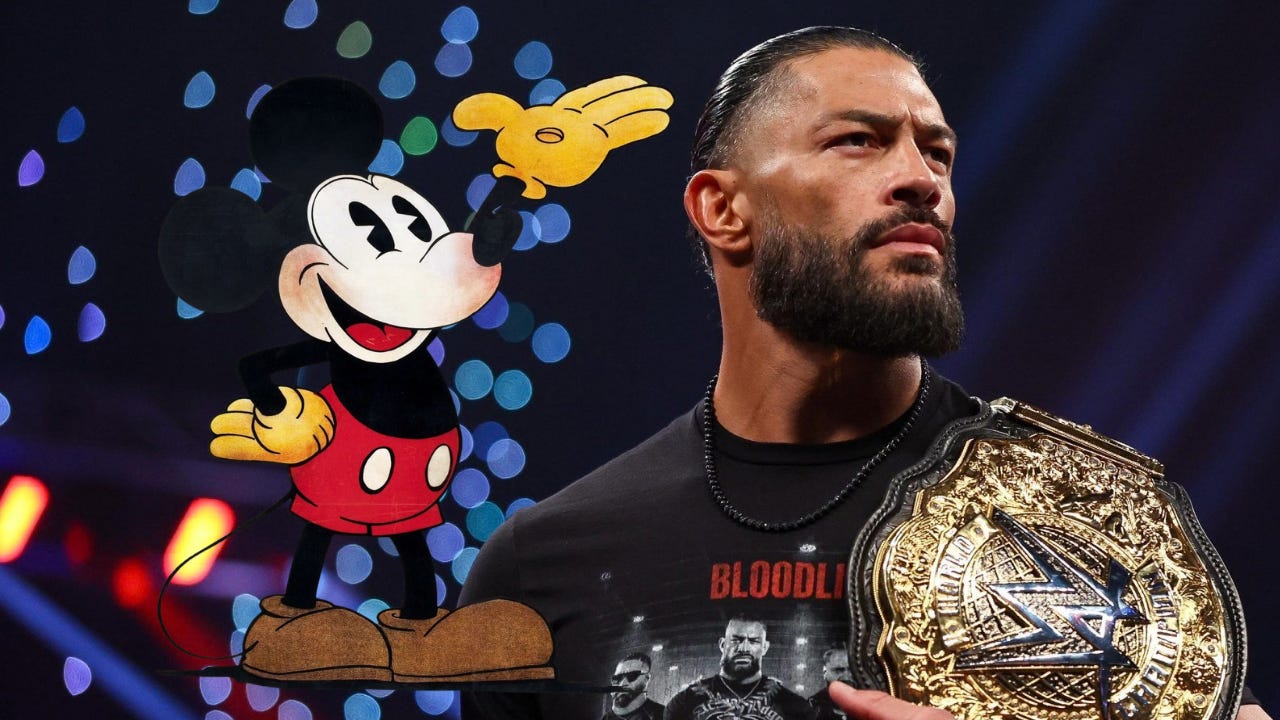
“Where dreams come true.” “The happiest place on earth.” “Then, now, together, forever.”
Oh no. Do those fit together?
When the calendar flips to December and the Survivor Series PPV is in the rearview mirror, WWE will turn it’s full attention to the John Cena Classic — a first-time event of it’s kind that will take place on December 14.
Per Cena himself, the John Cena Classic isn’t going to be a tournament. It’s more of a showcase. WWE stars vs. NXT stars in matches where the outcomes don’t matter, but the crowd reactions do. Nope, doesn’t make much sense and the more WWE dishes out details regarding the event, the less we really know about it. Let’s be fair, though. Just a like a train wreck, it’s been hard to look away from whatever this is.
There are plenty of reasons to furrow your brow about the John Cena Classic. Outcomes should matter, Cena shouldn’t neuter the personalities of every star he invites, and fan voting in pro wrestling rarely works out as devised — a full rant on this topic is front and center on the Brass Ring Media Pro Wrestling Podcast this week. Here’s what keeps the brow furrowed and the brain worried — the location.
Disney World looms
The John Cena Classic is taking place at Disney World this December and that’s much too close for the entertainment corporate behemoth to be to our beloved wrestling industry.
“Outside of Walt Disney, I think Vince McMahon has been one of the most significant storytellers of characters in our society,” Gary Vaynerchuk said in an interview on Busted Open in 2021. I think VeeFriends being one of the most important things in my life over the next 50 years, it’s going to make sense as to why I always was associating [it] to Transformers, wrestling, GI Joe, Disney. I’m a storytelling, character-based human being, and I think wrestling is unique because, unlike wrestling, everything else is fictional. [These are] real humans that play these characters, but it’s storytelling. I think it’s been the most significant storytelling machine in our society, and that I admire.”
Gary, I do too. Seconded. The thing is, only half of this analysis is correct. Real humans play the wrestling characters and pro wrestling is a significant storytelling machine in our society, but leave it far away from Disney, Transformers, and GI Joe. In fact, a full Disneyfication of WWE will strip it of it’s soul. The same soul that Gary Vee is admiring.
Of course, there is a lot of Disney in what WWE has done for decades. Stories, characters, good vs. evil, merchandise, experiences, memories, and nostalgia are part of the Disney formula and all of that is present in WWE and pro wrestling across the board. Still, Disney isn’t pro wrestling. It’s different and this new, budding relationship between WWE and The Mouse is scary because it appears to serve as an example of how current WWE leadership doesn’t understand that important reality. Make the Disneyfication stop!
“Remember, WWE is a different audience than the UFC, and when it comes to going after families, that’s our audience, and I think advertisers are starting to see that. Frankly, I’m excited for 2027 because we’re working with The Walt Disney Company on some special events around Disney and WWE and bringing those two audiences together since, of course, what do they have in common? Family.”
That was TKO Group COO, Mark Shapiro, at a Goldman Sachs Conference. I’m not sure he gets it. Families have always been an audience target for pro wrestling promoters, so he’s on the right track there. My question for him would be, “are you sure you know how to reach them?” Replicating the Disney model for WWE would be a mistake.
Hulk Hogan does not equal Mickey Mouse
Think about this for a minute. Hulk Hogan is Mickey Mouse, Roman Reigns is Darth Vader, and Cody Rhodes is Captain America. It’s some of the most famous WWE Superstars representing some of the most impactful characters in the Disney universe.
Now, imagine you’re walking through Disney World and into a newly created WWE Land. You BMF walk underneath a sign plastered with Hulk Hogan’s face and that says “Welcome, Brother.” You keep walking and you find yourself in a large line to get an autograph from the big bad heel, Roman Reigns. After you get the signature of the infamous villain, you hop on the Rey Mysterio 619 Express — a high flying adventure ride in which you sail above the park exactly like Mysterio in his prime. From there, it’s time for the Cody Rhodes lunch and meet and greet. You grab your American Nightmare themed plate and hit the buffet, just in time to meet Cody Rhodes at your table and snap a picture with him and the WWE Championship belt. You get where I’m going with this, right? All of that costs money and would mean dollars in the deep TKO Group pockets.
Now, keep in mind, these characters you run into aren’t the actual people. They aren’t the real Roman Reigns or Cody Rhodes, but their brands. Like Darth Vader, like Mickey Mouse. Put anyone in a Darth Vader suit and that’s Darth Vader. Boom.
The same thing holds true with countless Disney character attractions — Elsa, Anna, Captain America, the rest of the Marvel gang, the rest of the Star Wars gang, Cinderella, Moana, Donald Duck … if it’s a Disney character, it’s a brand, and that’s the essence of what Disney is. Star Wars? Marvel? Both Disneyfied and it worked because their characters fit in the same mold.
WWE character brands are human
WWE isn’t that way. Sure, Roman Reigns has a brand, but it’s finite because it’s human. It wouldn’t mean anything for a child to take a photo with or get an autograph from a fake Roman Reigns. Why would anyone want to eat lunch with an imposter Cody Rhodes? Oh, I could drink a couple beers with a fake Steve Austin at Stevewiser Tavern in WWE Land? Big deal. Just like Gary Vee said, real people are playing the characters, which means those characters can only be brought to life in a certain and specific way.
So, why is this a problem? It’s easy for business-minded money hounds like Shapiro and WWE President, Nick Khan, to monetize brands. They love it. They can put a bunch of flashy corporate words around “brand” like synergy, alignment, and scalability and swim in the all the money together like two Scrooge McDuck’s.
When Shapiro and Khan show up to Disney World for the John Cena Classic, they are going to see a Disney World stocked like a trout pond full of never-ending amounts of brand and opportunity that are making money for the company at every given moment of the day. Then, they’ll say this:
“Wait, we’ve got brands too. We’ve got the same opportunity. We go after families. Our roster is full of brands. All the current-day wrestling characters, all the nostalgia characters that are in the WWE Hall of Fame, our historic events, it’s all there to be leveraged for the right price. Right?”
Wrong
No. It isn’t. In order for pro wrestling — even WWE — to work as best as it can, the characters — or stars — have to be viewed and treated as people. WWE Superstars are more like NFL stars than they are Snow White. Caleb Williams is a guy that can make the NFL and the Chicago Bears a lot of money, but he’s a real guy. He’s a person, who is a star now. Leverage him while you can, but he’s not a never-ending money maker. He matters differently. Pro wrestlers are the same way.
Plus, not all wrestling stars are created equal. In the Disney-verse, hated villains from movies and cartoons can parade around the park like lovable brands. “Awww, it’s Ursula … I love her!” Could you do the same thing with a heel wrestler? No. Why would you? So, he could get ignored, booed, and scoffed at? Darth Vader isn’t getting booed as he walks through Hollywood Studios. Royce Keys should. Liv Morgan should. The Rock should.
A lot of WWE heels don’t and wouldn’t because WWE already has flown too close to the sun on this exact psychology, which is why it’s reasonable to think they aren’t worried to, or don’t care if they go all the way with it like Disney did with Marvel and other brands it devoured.
WWE isn’t real, but it plays at real life. When you watch a Marvel movie, you know that Thanos isn’t really dissolving someone into tiny pieces with the Infinity Gauntlet. WWE is working to achieve something else. The punches are supposed to be real. They aren’t, but the idea is that they look as close to real as possible. Same thing with the submission holds, the slams, the top rope maneuvers, the chair shots, and usage of other weaponry. The idea is they are actual people fighting to see who’s the best or to solve an issue. In that world, you can’t make money off of everything and that needs to be ok.
WWE will make enough money
Is it? Doesn’t seem like it. Khan’s answer would be something like, “take that world where you can’t make money, turn it sideways, and stick it straight up your candy ass!”
Fine, Nick. Look, TKO Group owns WWE. They paid billions of dollars for it and they have the right and obligation to monetize the hell out of that company just like Vince McMahon did before them. They just can’t look at the company like Disney and see all the same avenues for dollar signs and revenue.
There is more juice to squeeze out of the Disney fruit than there is the WWE fruit. That’s a fact. Not because WWE is an inferior product, but because it’s different. WWE is a different beast. If it’s not treated as such, it will lose it’s essence, meaning, and identity. And then what’s next? It loses it’s ability to be the gargantuan money-making machine it always has been.
Here’s a message to TKO Group - know when to stop. Someone cover their eyes as they enter Magic Kingdom for a couple joyrides during the John Cena Classic.
Has the WWE product too closely mirrored Disney? Let us know in the comments!

Subscribe to the Brass Ring Media Newsletter HERE.
Follow Zack Heydorn on Bluesky @zackheydorn.bsky.social.