


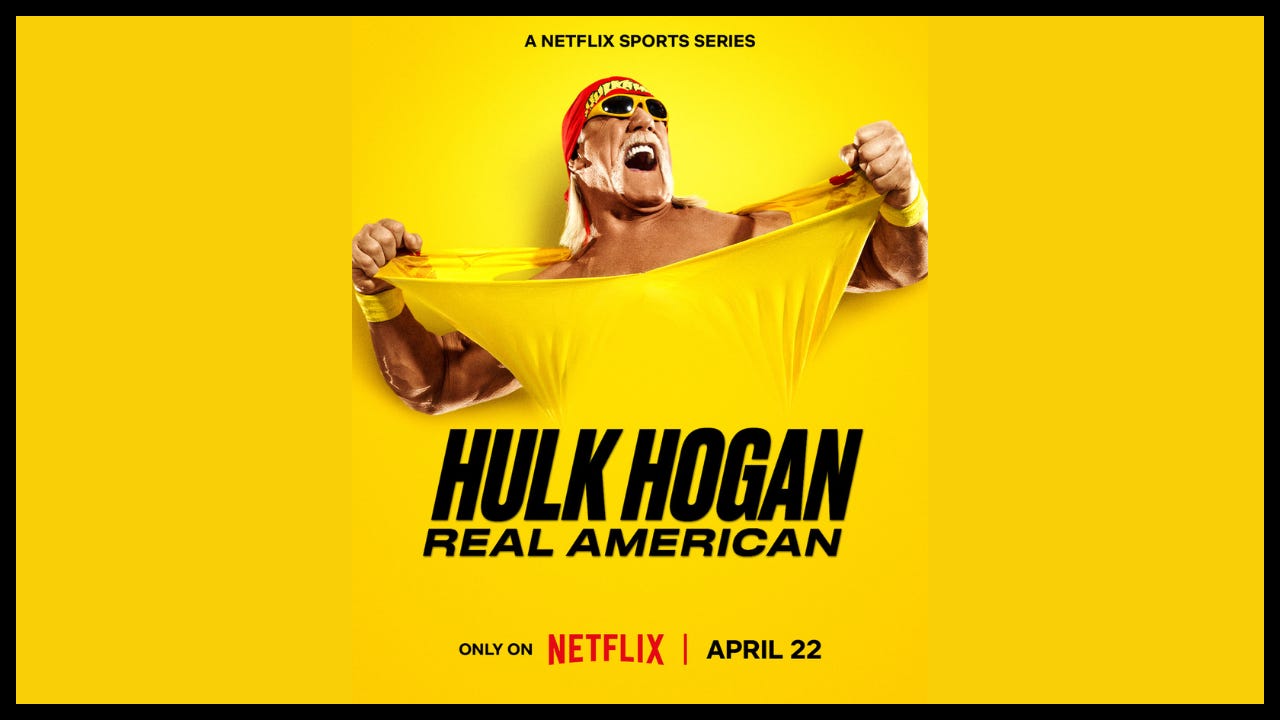
Here’s what I worry about most when a new documentary about Hulk Hogan is set to be released — the truth.
Between the legend of Hulk Hogan that has mutated over the years and the straight up lies that the man himself has told, it’s hard to look at a Hogan project and confidently believe that it’s possible to successfully complete one at this point. What’s real and what isn’t? Such is life in the Hulk Hogan business.
Hulk Hogan died on July 24, 2025. He left a complicated legacy behind that covered the spectrum of iconic and cultural superstar to racist. On April 22 a new Hogan documentary titled Hulk Hogan: Real American will drop on Netflix and attempt to find and tell the truth about Hogan’s life.
Finding the Hogan truth
Finding the truth. That topic was one of the first I got into with Bryan Storkel in a special Brass Ring Media interview about the film. Storkel is the director of the project and the man who conducted Hogan’s final interviews before his death.
You can listen to the full Brass Ring Media conversation with Bryan Storkel HERE.
“We explored some of that,” Storkel said about Hogan and the truth. “There are all those lies you’ve heard over the years. Like the Metallica story, or things about different wrestling legends. And he, you know, makes these things up. I think that’s part of the character. The myth and little bit of embellishing and exaggerating. You know the ones where he flew back and forth to Japan so much that he wrestled more than 365 days in the year, because he crossed the international dateline. Like, that feels just like a Chuck Norris story to me. Those things help with the myth, so we chose not to feature those too much.
“There’s a little bit of back and forth with him and Bret Hart. And Bret Hart even being like, ‘yeah, he’s a liar.’ Putting that in there is important. To me, the wrestling lies, or legends, or myths don’t bother me that much. It was like, is he going to be honest about his personal life and the conflict and things he’s had there? And I felt like he sat down and actually opened up and felt really vulnerable. I think, after the first day of interviews, he caught he had been telling me some stories about some early wrestling days. And he called me up later that night. He’s like, ‘you know, I was thinking about this again and I think maybe I wasn’t telling the truth about some of these things. I started thinking about it, and I realized the dates were off.’ And, like, ‘maybe I’ve just been thinking of it that way for so long and maybe that’s not the truth.’ And I said, ‘Well, let’s, let’s talk about it when you get back here tomorrow.’”
How do you tell a story so big?
Stipulating to the fact that the truth has sometimes been hard to come by in Hulk Hogan documentaries, the task of telling the Hogan career story is nearly impossible. It’s a career that spans decades with many years loaded with history. Storkel opened up on how he approached the daunting task of telling the Hogan story properly.
“It’s definitely a huge task,” Storkel said. “You could never cover all of it. What are those most important moments that you have to hit and then what are the other moments that kind of help the emotional arc of the story? The personal story. I had several different structures for it and things I wanted to include. As you get into it deeper, things keep getting whittled down and you keep losing things that you love. But you just have to.
“The Japan stuff is incredible and that got cut down to such a short thing because we didn’t have time for it. It didn’t have a bigger picture reason for telling the story outside of just seeing the really amazing wrestling and the different style of wrestling that he had in Japan. So yeah, ultimately, you lose some things you love and then you find things that you weren’t expecting that surprise you along the way.”
A complicated legacy
Now, about the complicated legacy that included disgusting and racist remarks? The documentary goes there and Storkel received reflection from Hogan about that time in his life during the final interviews that were conducted for the film.
“Some apologies in the past might have come across as shallow or not really remorseful,” Storkel said. “For whatever reason at this stage of life, like a lot of things he talked about, he seemed reflective on and had regrets (about) and (he) was was fine talking about those. And I think he also, at the same time, was like, there’s only so much I can do. People are going to think what they’re going to think now … He didn’t seem like there was anything else he could do … He definitely felt like he came across with remorse for certain things in the past and things that he wished he could have done differently. And then he was also moving forward.”
Hulk Hogan: Real American is for current and new fans
Storkel said that the film is compelling for both new fans that may learn about Hulk Hogan for the first time with it and fans that have seen previous pieces of work and already know the Hogan story.
“He (Hogan) looks back on it (his career) very fondly,” Storkel said. “It was more reflective than other interviews I’d seen. Even looking back at some of the negative things, and like seeing t hat time period in a different way in this interview, and just reflecting on that.”
Hulk Hogan: Real American premieres on Netflix on April 22. The full trailer for the film can seen below.

Subscribe to the Brass Ring Media Newsletter HERE.
Follow Zack Heydorn on Bluesky @zackheydorn.bsky.social.