Column
By Zack Heydorn · August 27, 2026
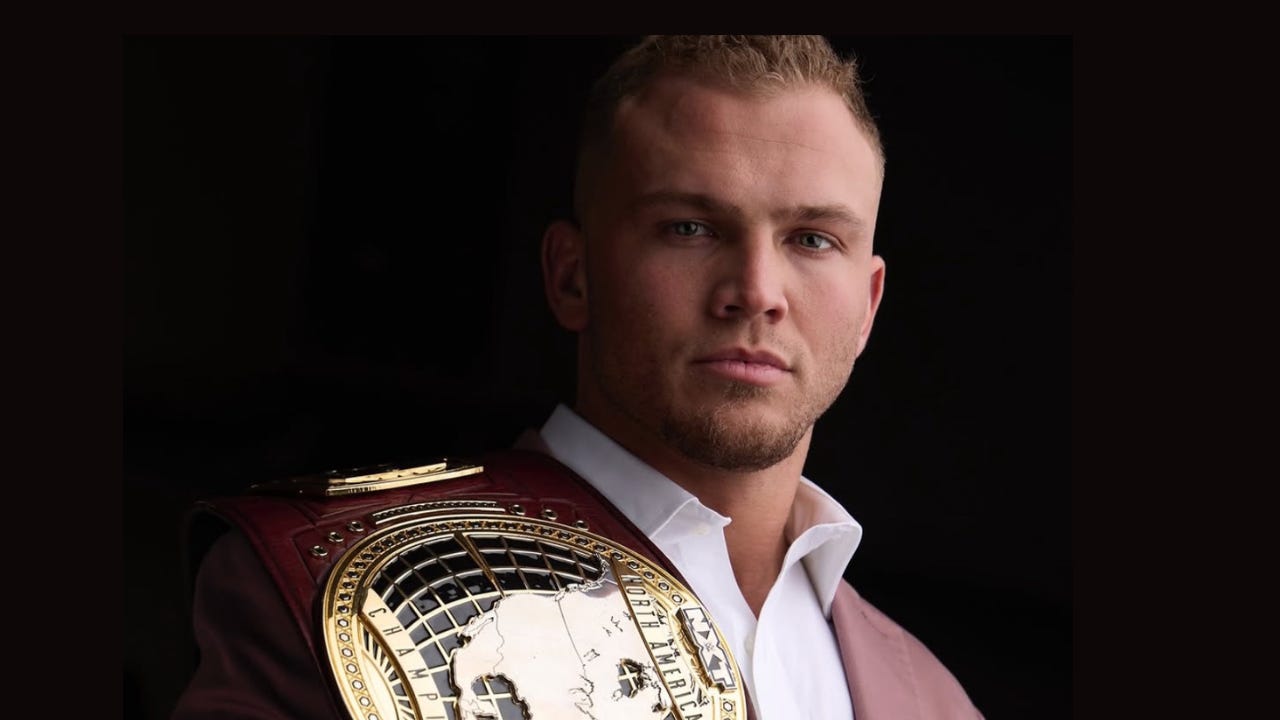
NXT Heatwave is this Sunday afternoon from inside the Bert Ogden Arena in Edinburg, Texas and live on the CW Network. Myles Borne has a busy day on his hands.
Not only will he defend his NXT North American Championship against Jackson Drake, but he’ll also be teaming with Tavion Heights and putting the NXT Tag Team Championships on the line against Vanity Project. A busy day indeed, but Borne wouldn’t have it any other way.
In an exclusive interview with Cameron Hawkins of Brass Ring Media, Borne opened up on being a lead guy on NXT, where his wrestling style came from, his potential influence on fans, and much more. The full interview can be read below:
Cam Hawkins: The whole [NXT] landscape has changed, and on this side of it now, double champion Myles Borne. How does it feel to be one of the leaders in the men’s division after all that kind of top talent (Oba Femi, Trick Williams, Je’Von Evans, Ethan Page and Ricky Saints) moves on?
Myles Borne: You know, it feels great. It’s a big responsibility. It’s a lot of pressure that was added. You know, those guys, they carried the division for a long time. They carried us, uh, they represented the company well. I mean, they’re just, they’re just some dogs, and that’s why they’re where they are now. So they all got swept up and taken away, and we had to step up. And, you know, it’s a privilege to be one of the guys that were trusted to step up and kind of, you know, take initiative. I mean, we’ve got some studs in the locker room, man. Some studs. So I’m excited for that. There’s going to be a lot of guys coming onto the program that are just, you know, loaded with potential who are going to be the next guys coming up that lead this company. I mean, no doubt about it. So it’s— I’m just very glad that, uh, I’m in a position to do it now.
CH: One thing about NXT right now, everybody seems to kind of have their own style, the way of doing things. Um, you know, when I was— when I was a young guy, you know, I was, uh— when I first saw like the Dean Malenko’s and Eddie Guerreros of the world, I was like, “wow, like this, this super technical, like ground-based wrestling. It’s just so cool.” And even when they mix in the high-flying moves, there’s still a real technical aspect. You know, “No Quarter Catch Crew”, looking at the guys who coached you, the guys who trained you, knowing that, you know, you’ve been amateur wrestling since you were a little guy, just talk about developing that style and bringing that style to national TV, to WWE. What makes you want to wrestle in that particular style?
MB: It’s just the way that, you know, I naturally move. You know, I love watching Eddie Guerrero. I love the way he moves and how snappy everything is. He was something that when I watch him, I’m just... It doesn’t matter what he’s doing, I’m watching, I’m entertained. I like the way he moves. I believe everything he does. But yeah, I remember when I first got here, I was that amateur wrestler and I was so focused on trying to transition to pro wrestling and kind of leave the amateur at the door, just kind of leave that behind. And, you know, it was... I ended up having a match very soon, as soon as I got here. Like, I had barely any time and I had a match. And I was thinking, I remember telling my coach, I was like, “dude, I’m just now learning. I don’t even know what I’m going to do.” So we were messing around in the ring and I started doing some amateur stuff and just kind of mixing in what I did know. And, right there he stopped me, said, “Do that. Do exactly that.” I mean, it’s different, you know, it’s both sides.
And I’ve stuck with that ever since, you know. I love the amateur transitions into moves and the way that I just naturally carry myself as a grounded wrestler. That style has always suited me. I remember I climbed up on the top rope and I said, “oh, this is a lot higher than I thought it was. Yeah, I think I’m gonna stay on the ground, alright” That’s just where I’m comfortable at. I like that style. It fits me naturally, and I don’t want to force anything, or try to force something that, you know, I might not be... That might not be what I’m great at. You know, I stick to what I’m doing and it’s working. Obviously. So yeah, I just love that catch style grounded wrestling.
CH: I’m a Texas guy. Football is really big down here. And a bunch of my buddies are football coaches. One of my best friends, his first big job was coaching football at Texas School for the Deaf, right? So real challenge, real kind of, kind of different way of doing things, different way to communicate. I guess my question for you, what was it like the first time you got to hear your coach in a match? Like, I read that story that, you know, all of a sudden they allow you to use the FM radio and the hearing aids. How different was that the first time you got to hear your coach? And, you know, did it make things easier? Was it about the same? What was that experience like?
MB: That was a very cool experience because it was the first time I felt like I wasn’t alone in my match. I felt like I had a team. Because wrestling is a very individual sport. You go out there and you win alone or you lose alone. It can be very embarrassing. But I remember I had wrestled from the age of 4 all the way up till I was about 15 years old once I finally heard my coach for the first time. So I was so used, I was acclimated to the idea of “I’m alone, I do what I do, and I was good enough to where my coaches trusted me.” They knew that I was smart enough to and had good mat awareness that I was going to figure it out. And also I’ve always thought it was a disadvantage when the coach was yelling out something because the other opponent’s hearing it and saying, “oh, you want him to do that? Well, I’m going to counter that.” So I always thought that’s backwards. Why would the coach yell out, you know, a move? Like, that’s like yelling... That’s like [coaching football] football and yelling out the play you’re going to do.
It was almost like a cheat code when I got it in my mic, ‘cause he could just whisper it to me. And I remember I was like, “Wow.” I was like, I stopped for a second in the match. I was like, “I can hear my coach. I don’t feel alone. This is cool.” It was like, we’re like a team now. So that was fun for me, you know? But it was different, and I was so used to wrestling without hearing any of my coaches to where it was a short-lived experiment. I eventually got rid of the FM system because there was like a delay. I would hear something and then do it. And it was kind of throwing me off a little bit. Whereas usually I just go. When I feel something, I go. But yeah, it was a cool experience bringing in that FM system into wrestling for the first time.
CH: We talked about like, an Eddie Guerrero. And of course Eddie doesn’t have this specific issue, but, you know, in the heyday of WCW, you had a lot of Japanese wrestlers, you had a lot of Mexican wrestlers who don’t speak English. I think of like, a Stephanie Vaquer (Myles flashes a quick grin) who’s getting better at her English. But has communication been difficult for you in matches, in promos? Is that something that you had to get better at, that your peers had to get better at, or did it come pretty natural early on?
MB: You know, a little bit of both. It was something that I’ve always been able to adapt quickly with, but this was a new environment and a much quicker-paced environment. So, [my] way of naturally adapting to things had to.. it had to be faster. Just up here at NXT, everything moves so quick and there’s so many variables that, you know, you don’t really get time to just kind of figure it out. You gotta get it or you know, there’s someone else that’s going to do it. So it was a joint effort. I remember a lot of the wrestlers, they understood this. So, you know, it was amazing watching these wrestlers, you know, who’ve never dealt with the situation, be able to naturally just adapt and be [of assistance] to me. And it was amazing. You know, I can’t thank the crew up here enough for how they’ve helped me manage this and work along with me on this and be very understanding. And it’s worked out great. I am better, my communication here is better than it’s ever been in my home life. (Myles Laughs) And it’s just been great. So it’s been a joint effort, obviously.
CH: I love that. I was lucky enough when I started to really do this as a career to talk to [for example] Bianca Belair really early on. And how important it was for somebody who looked like Bianca Belair and talked like Bianca Belair and dressed like Bianca Belair, how important that was for little girls who had never seen themselves wrestle, right? And that is across, you know, gender, across ethnicity, across race. It’s so important for not just kids but adults too, to see themselves in the wrestlers. How have your interactions been with fans who might be hard of hearing? Have you, you know, had like cool fan interactions? Have you gotten letters and, DMs and stuff like that? How’s that been for you so far?
MB: It has been amazing. And I’ve had so many different people reach out to me as far as DMs and letters and in person and at meet and greets to where I didn’t even realize what kind of impact I was actually gonna have. It was something that... I was like, okay, I think I’m gonna have it. I think I’m influencing people. I think I’m gonna help inspire kids [by being] who they can see. They might not have a hearing impairment, but they might have something else that they’re dealing with. And that’s what I really want. I want people to say, “oh, just because I’m not hearing impaired like Myles, I have this, and everyone’s welcome.” You know, I want everyone to feel like we’re all doing this. We can all do it regardless of what obstacles you have to overcome. You might not have mine, and I might not have yours, and yours might be harder than mine, and very much so, could be. I want everyone to feel, you know, like we’re doing this, so we’re a team, you know, no one’s singled out. And I’ve had, I’ve had people message me about their kids and parents.
I’ve had parents message me asking for advice, like, “hey, my child is hearing impaired, this is their dream, I don’t know what to say to them. What do you advise?” And I’m sitting there thinking, “oh my gosh, that’s my responsibility, right?” Yeah, I’m not a parent. I said, “let me put you in contact with Mama”, because that’s crazy. Not crazy, but like, “oh crap, this is a big responsibility.” I didn’t realize that this might be something I have to help navigate because my parents had to figure things out with me and take chances and risk and put me in situations that scared the hell out of them. But I told them I can do it. And eventually, you know, it works. So, I’ve had kids come up to me at meet and greets and say, “you’ve inspired me, you changed my life.” Just a couple weeks ago in Minnesota, a guy and his girlfriend came up to me and said, “I never watched WWE before and I got put onto you.” He was at SummerSlam. He came to SummerSlam and he said, “I watch now and, I just want you to know I started training and I’m doing pro wrestling school.”
And, you know, these were things I didn’t even think about, but I’m like, wow, this is awesome. This is absolutely awesome and incredible. So it’s been really neat watching, you know, because sometimes I get lost in the moment that I’m doing all this and I forget that, oh wow, all these people are watching and they’re moved, they’re inspired, and it’s so nice when people come and remind me of that. That’s what makes everything worth it, you know.
CH: Looking at your weekend, double champ pulling double duty, how do you prepare for both a singles match and a tag team match same night? Because usually, you’re preparing for a match a week and training, right? But double duty, live TV, defending your titles, not just the physical, but how have you started to kind of mentally prepare for what you’re going to experience this weekend?
MB: You know, honestly, I just... I’ve had a good couple months. I’ve been training, uh, alongside AJ Styles. He’s been a really good trainer, one of the best to ever do it. He’s been pushing me really hard with cardio and conditioning, and that’s most important to me, is being able to go the distance and, having that confidence mentally, knowing that I’m not going to get tired, that no matter what happens, I’m going to be able to keep kicking and keep going. That allows me to really relax and feel confident and just do what I do best. So I haven’t necessarily been training specifically just for two matches. I just been training for whatever gets thrown at me, whether it’s the entire show, I don’t care. I want to be in the shape and conditioning to where whatever they throw on my plate, I got it. I don’t want to be... I don’t want Sunday to roll around and me go, “oh crap, uh, I’m not ready, I’m not prepared.” That’s the worst feeling in the world. I’m going to this weekend like I have one match, even though I’m pulling double duty, because I know [I have] one match at a time.
And I’ve done the thing to prepare, and I know that my body’s not going to break on me. I got it. Like, one match at a time. That’s all I’m focused on.
CH: What’s cooler, having a really good North American Title defense or having a really good NXT Tag Title defense? Because it’s not just you and your opponents, it’s you and Tavion [Heights] putting it together and making it work. Like, to me, that’s kind of a cooler feat, but I’m not the one in the ring. Which one’s cooler? Are they about the same? What do you think?
MB: You know, they both have different... Feelings when it comes to both of them. They’re both different structurally, and for me, it feels really good to walk away from my own match, with the North American Championship and do something on my own. That’s what I’ve done my whole life, wrestling was very individual. But at the same time, growing up, I missed that idea of having a teammate, you know, having someone I’m out there with. We’re doing this together. If I can’t do it, hey, help me. So it’s tough because both feel really good. But that tag match, man... It feels different... You got your brother with you. You’re not alone. You both know what’s at stake and you’re doing it together. And it’s like, you know, it’s a better feeling coming out when you have that brother. It’s a better feeling walking into it too. You kind of look at each other before every match and we’re like, “you know, hell yeah, let’s do this.” You know, it feels really good.
CH: You’re already the first wrestler who happens to be deaf to have this big of a platform. You’re already the first wrestler who happens to be deaf to be North American Champion, first to be NXT Tag Team Champion. So my question is this, to close out the interview: finish this sentence. Myles Borne will be the first wrestler who is deaf to—
MB: I gotta say, win the WWE Heavyweight Championship.
CH: There it is, there it is.
MB: That’s gotta be it.
CH: This weekend, NXT Heatwave, pulling double duty. The NXT North American Champion, NXT Tag Team Champion, and future, future WWE World Heavyweight Champion, Myles Borne. Great talking to you and best of luck to you this weekend.
MB: All right, thank you so much, Cam. I really appreciate your time.
CH: Absolutely.
Is Myles Borne going to be a top tier star on the WWE main roster someday? Debate in the comments!

Subscribe to the Brass Ring Media Newsletter HERE.
Follow Cameron Hawkins on X HERE.
The Brass Ring Media Pro Wrestling Podcast is here to explain the drama surrounding the WWE and ESPN news of the week. Is ESPN really going to pull the plug on…
It’s always something. One day it’s AJ Styles’ kid not paying his dues. The next it’s a major sports conglomerate wanting out of their content distribution…